Trusting an app with thousands of dollars feels risky. Horror stories of frozen accounts, lost transfers, and scams make headlines. But modern remittance apps are often safer than traditional methods when you know what to look for. This guide helps you evaluate any money transfer service and protect yourself from fraud.
What Makes a Money Transfer Service Legitimate
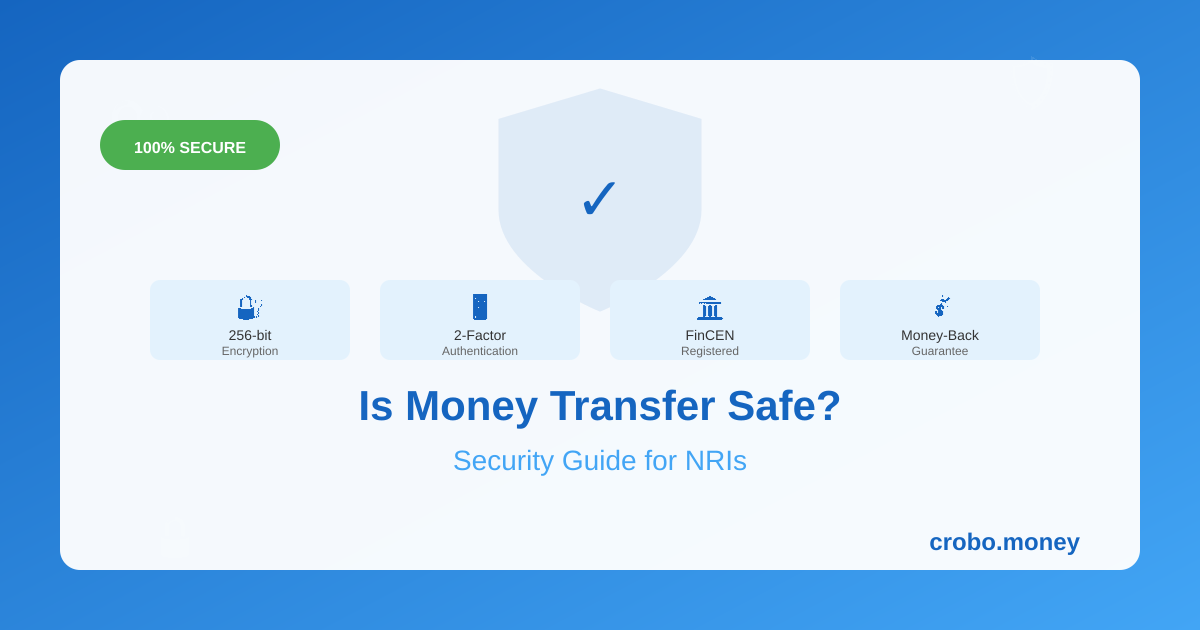
Every legitimate money transfer service operating in the US must be registered with FinCEN (Financial Crimes Enforcement Network) as a Money Services Business (MSB). You can verify this at FinCEN’s website. State licenses are required in most states for money transmission and these are publicly searchable. Partnerships with regulated banks for fund handling and regular audits for financial and security compliance round out the requirements. Crobo, for example, is FinCEN registered and partners with banking institutions regulated by both US and Indian authorities.
Security Features to Look For
A secure service should offer bank-level 256-bit encryption for all data transmission. Two-factor authentication (2FA) for account access is essential. Biometric login options like Face ID and fingerprint add convenience and security. Transaction monitoring for fraud detection catches suspicious activity. Device recognition to flag unusual login locations and instant notifications for all account activity round out robust security.
Red Flags That Signal a Scam
Be wary of rates that seem “too good to be true” since scammers lure victims with impossible rates. Pressure to send money immediately is a classic scam tactic. Requests for payment via gift cards, cryptocurrency, or wire to individuals are huge warning signs. No verifiable company address or customer service should make you walk away. Unsolicited contact claiming you’ve “won” something is always a scam. Requests to share your login credentials with anyone is never legitimate.
Understanding Money Protection
Legitimate services protect your funds in several ways. Segregated accounts keep customer funds separate from company operating funds. FDIC-insured partner banks mean your funds are insured during processing up to limits. Guaranteed delivery policies mean money back if the transfer fails. Clear refund and cancellation policies should be prominently displayed. Ask your service provider how your money is protected during the transfer process.
What Happens If Something Goes Wrong
Reputable services have clear dispute resolution processes. For delayed transfers, you should receive proactive communication and updates. For failed transfers, automatic refunds within a specified timeframe are standard. For incorrect transfers, assistance recovering funds or correcting errors is expected. Crobo offers a money-back guarantee and 24/7 support for any transfer issues.
Protecting Yourself from Fraud
Even with a secure service, you must stay vigilant. Use unique, strong passwords for your money transfer accounts. Enable all available security features like 2FA. Only download apps from official app stores. Never click links in unexpected emails claiming to be from your transfer service. Verify recipient details through a separate channel such as a phone call before large transfers. Monitor your bank statements for unauthorized transactions.
Why Apps Can Be Safer Than Traditional Methods
Carrying cash is risky and untraceable if lost. Bank wires pass through multiple intermediaries, each a potential failure point. Check fraud is common and reversible by criminals. Modern apps provide end-to-end encryption, instant tracking, and direct transfers to verified accounts. The digital trail also helps in case of disputes.