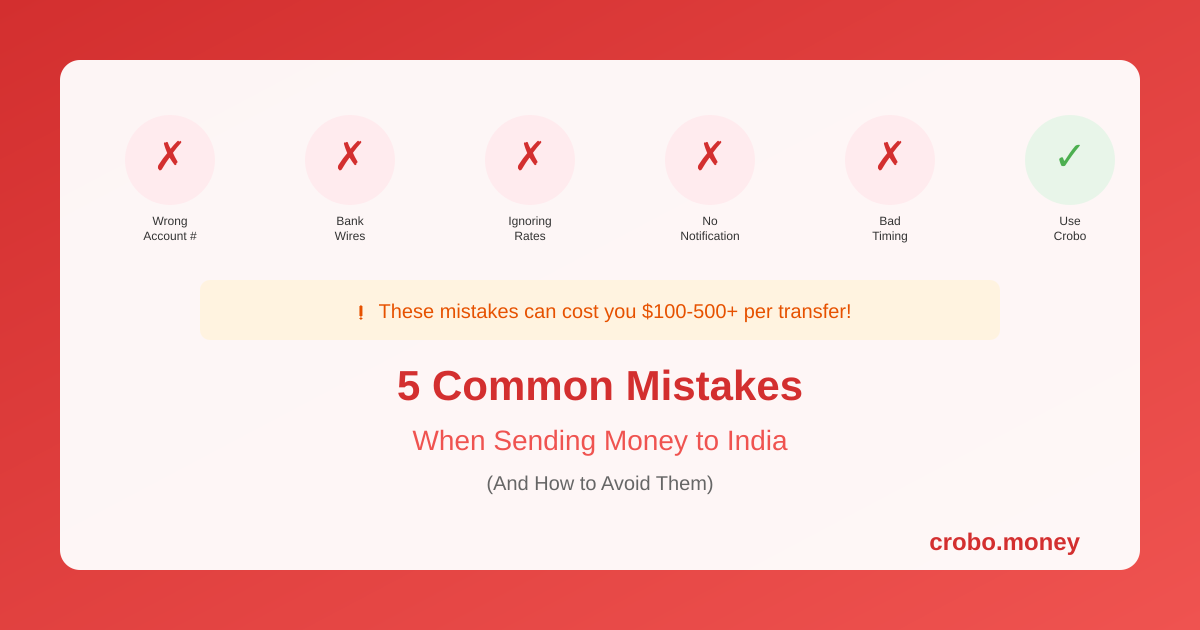
If you send money home regularly, you already know how quickly transfer fees and poor exchange rates can eat into what your family actually receives. Learning how to avoid fees when sending money to India is one of the smartest financial moves any NRI living in the United States can make. Whether you send money every month or just a few times a year, the savings add up to hundreds of dollars over time. This guide walks you through everything you need to know — in plain English — so you can keep more of your hard-earned money where it belongs.
Why Do Money Transfer Fees Add Up So Fast?
Most people focus only on the transfer fee shown on the screen. That number might look small — sometimes even zero. But the real cost is often hidden inside the exchange rate. When a provider gives you a worse USD-to-INR rate than the mid-market rate (the real rate you see on Google), they are quietly pocketing the difference. On a $1,000 transfer, a 2% rate markup means your family in India receives the equivalent of $20 less than they should. Send that amount every month and you have lost $240 in a year without even realizing it.
There are typically three places fees hide in international money transfers:
- Flat transfer fees: A fixed charge per transaction, often between $3 and $30.
- Exchange rate markups: The gap between the mid-market rate and what the provider actually gives you.
- Recipient bank fees: Some Indian banks charge a small fee to receive foreign inward remittances.
Understanding all three lets you compare providers honestly and choose the one that delivers the most rupees for your dollars.
What Is the Mid-Market Exchange Rate and Why Does It Matter?
The mid-market rate is the midpoint between the global buy and sell prices for any two currencies. It is the rate you see on Google, XE.com, or Reuters. No provider is obligated to give you this rate, but the closer they get to it, the better deal you are receiving. A provider offering “zero fees” but a 3% worse exchange rate is actually more expensive than one charging a small flat fee but offering a rate very close to mid-market. Always calculate the total cost, not just the listed fee.
How to Avoid Fees When Sending Money to India: Practical Tips
Here are actionable steps you can take right now to reduce what you pay every time you send a remittance from the USA to India.
1. Compare multiple providers before every transfer. Rates and fees change daily. A provider that was cheapest last month might not be cheapest today. Use comparison tools or check a few platforms directly before you send.
2. Send larger amounts less frequently. If you pay a flat fee per transfer, consolidating two smaller transfers into one larger one cuts your fee in half. This does not work for everyone, but it is worth considering if your family can plan ahead.
3. Avoid bank wire transfers for international remittances. Traditional US banks like Bank of America, Chase, and Wells Fargo typically charge $35 to $50 per international wire transfer and offer exchange rates well below mid-market. Specialized remittance services almost always beat them on both fees and rates.
4. Use a provider with transparent, real-time exchange rates. Before you confirm any transfer, check the exact INR amount your recipient will receive. If a platform is vague about the final amount, that is a red flag.
5. Look for promotions and first-transfer offers. Many platforms waive fees on your first transfer. This is a legitimate way to save money, especially when you are trying a new service.
6. Pay by bank transfer (ACH), not by debit or credit card. Funding your transfer via ACH bank transfer is almost always cheaper than using a card. Card payments often carry an additional processing fee of 1% to 3%.
How Do Popular Money Transfer Providers Compare?
To help you make an informed decision, here is a general comparison of common options NRIs use to send money from the USA to India. Note that exact rates vary by day and transfer amount.
| Provider | Typical Transfer Fee | Exchange Rate Quality | Transfer Speed | Hidden Fees |
|---|---|---|---|---|
| US Bank Wire | $35 – $50 | Poor (2–4% below mid-market) | 2–5 business days | Yes |
| PayPal / Xoom | $4.99 – $9.99 | Fair (1–2.5% below mid-market) | Minutes to 1 day | Sometimes |
| Western Union | $0 – $10 | Fair to Poor | Minutes to 2 days | Yes (rate markup) |
| Wise (TransferWise) | Variable fee | Excellent (near mid-market) | 1–2 business days | Minimal |
| Remitly | $0 – $3.99 | Good | Minutes to 3 days | Sometimes |
| crobo.money | $0-$1.99 | Excellent ( Google rate) | Fast | No hidden fees |
The table above shows that specialized digital remittance platforms consistently outperform traditional bank wires. When you know how to avoid fees when sending money to India, you naturally gravitate toward providers built specifically for this purpose rather than general-purpose financial institutions.
Are There Any Limits or Regulations NRIs Should Know About?
Yes. Both the United States and India have rules governing international money transfers, and knowing them helps you avoid surprises.
In the USA, the IRS requires that you report foreign financial accounts if certain thresholds are met. However, simply sending money to family members in India for personal or household expenses is generally not taxable in the US as long as the amounts are within normal gift limits (currently $18,000 per recipient per year before gift tax reporting requirements apply).
In India, money received from abroad by family members is classified as a Foreign Inward Remittance. The Reserve Bank of India (RBI) allows Indian residents to receive money from NRI relatives without a tax burden under the Foreign Exchange Management Act (FEMA), provided the purpose is legitimate — such as family support, property purchase, or education.
Always keep digital records of your transfers. Most online platforms provide downloadable receipts and transaction histories, which is helpful if you ever need documentation.
What Should You Look for in a Trustworthy Money Transfer Service?
Beyond fees and rates, trust matters enormously when you are moving thousands of dollars across international borders. Here is a quick checklist for evaluating any remittance provider:
- Regulation: Is the service registered with FinCEN (Financial Crimes Enforcement Network) in the USA and licensed in the states it operates in? This is a basic requirement for legitimacy.
- Transparency: Does the platform show you the exact exchange rate and the exact INR amount before you confirm? If yes, that is a good sign.
- Customer support: Is there a real way to reach a human if something goes wrong? Look for phone support, chat, or email responsiveness.
- Reviews: Check Trustpilot and Google reviews specifically from Indian expats. Real user experience tells you what marketing copy cannot.
- Delivery options: Can the money be deposited directly to your family’s bank account in India? Most quality services offer bank deposit as a standard option.
Knowing how to avoid fees when sending money to India is not just about picking the cheapest option today — it is about finding a provider you can trust consistently over many transfers and many years.
Conclusion: Start Saving on Every Transfer You Make
Sending money from the USA to India does not have to be expensive. By understanding how exchange rate markups work, comparing providers honestly, sending via bank transfer instead of card, and choosing platforms built specifically for USD-to-INR remittances, you can dramatically reduce what you lose to fees. Small savings on each transfer add up to real money over a year — money that stays with your family rather than disappearing into bank margins and service charges. You now have a clear roadmap for how to avoid fees when sending money to India, and the next step is simply to put it into practice.
If you are ready to send money home with confidence, crobo.money offers competitive USD-to-INR exchange rates with absolutely zero hidden fees. Built for the NRI community, crobo.money gives you full transparency on every transfer so your family receives exactly what you intended to send — nothing less. Try it today and see how much you can save starting with your very next transfer.